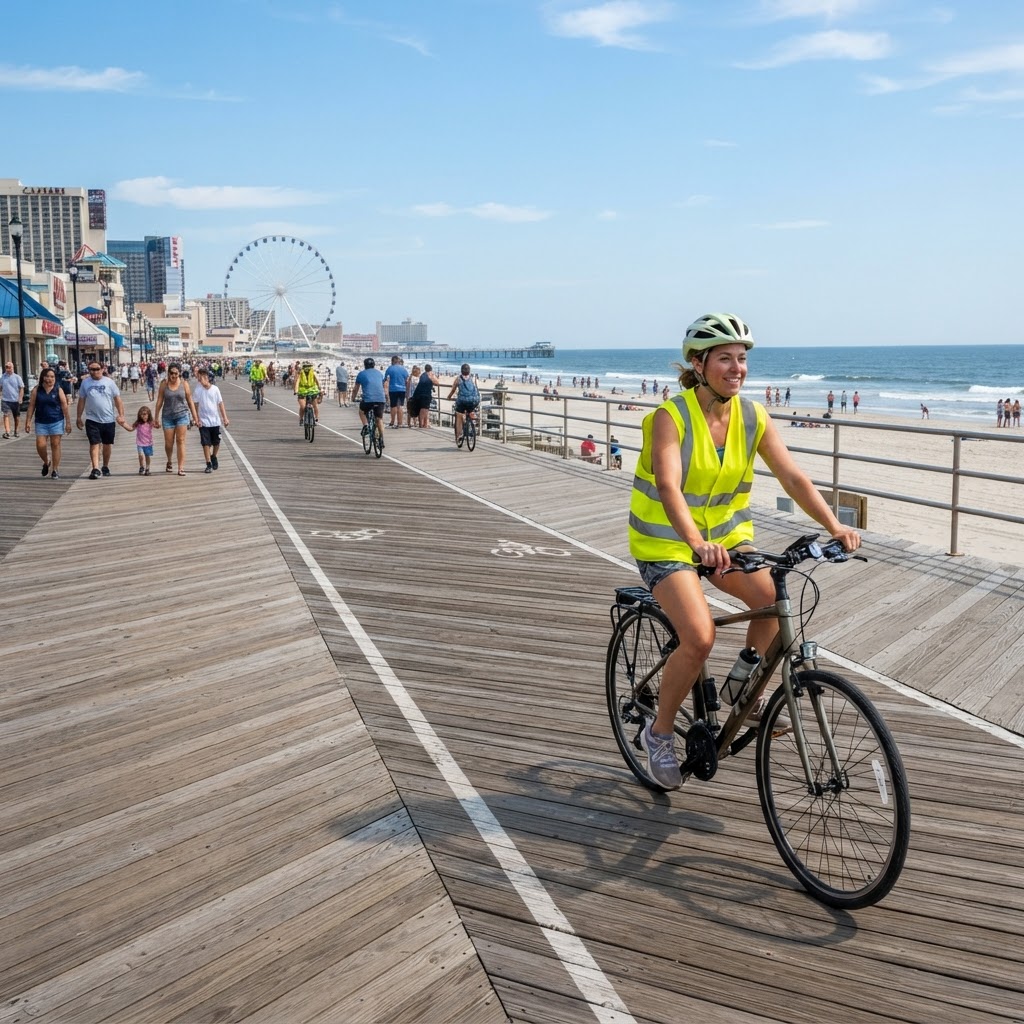
Safety First on the Shore
Cycling on the Jersey Shore is a wonderful experience, but it comes with unique safety considerations. From the shared spaces of the boardwalk to the coastal roads and the challenging conditions of wind and sun, being prepared and visible is essential. Here's our comprehensive guide to bike safety on the Jersey Shore.
Helmets: Your Most Important Gear
Why helmets matter: Head injuries are the most serious cycling injuries, and helmets reduce the risk of head injury by up to 85%. There's no good reason not to wear one.
New Jersey law: Helmets are required by law for cyclists under 17 in New Jersey. But we recommend them for everyone, regardless of age.
Choosing a helmet: Look for one that fits snugly, sits level on your head, and has a certification sticker (CPSC, ASTM, or Snell). Ventilation is important for summer riding on the shore.
When to replace: Replace your helmet after any crash, even if the damage isn't visible. Also replace every 5 years due to material degradation.
Lights: See and Be Seen
Front light: Essential for riding at dawn, dusk, or night. A bright front light (500+ lumens) helps you see the road and makes you visible to others.
Rear light: A flashing red rear light is the most effective way to be seen from behind. Use it at all times — even during the day in foggy or overcast conditions.
New Jersey law: New Jersey law requires a front light and rear reflector for night riding. We recommend going beyond the minimum with a bright rear light as well.
Daytime running lights: Studies show that using lights during the day can reduce accidents by up to 19%. A flashing rear light during daytime is a simple safety upgrade.
Visibility: Stand Out on the Shore
Reflective gear: A reflective vest, ankle bands, or jacket makes you visible to drivers from a long distance. This is especially important on Atlantic Avenue and other coastal roads.
Light-colored clothing: Dark clothing makes you nearly invisible at night. Wear white, yellow, or other bright colors to stand out.
Reflectors on your bike: Make sure your bike has reflectors on the front, rear, pedals, and wheels. They're required by law and provide additional visibility.
Boardwalk Safety
Yield to pedestrians: Pedestrians always have the right of way on the boardwalk. Slow down and pass with care.
Control your speed: The boardwalk is not a race track. Keep your speed moderate, especially in crowded areas.
Be predictable: Ride in a straight line and signal your intentions. Sudden movements can cause accidents.
Watch for hazards: The wooden boardwalk can have uneven planks, gaps, and wet spots. Keep your eyes on the path ahead.
Road Cycling Safety
Ride predictably: Follow the rules of the road. Signal your turns, stop at red lights, and ride in the same direction as traffic.
Be visible: Stay out of blind spots, especially near large vehicles. Make eye contact with drivers when possible.
Watch for doors: Ride at least 3 feet from parked cars to avoid being hit by opening doors.
Be aware of sand: Sand can accumulate near beach access points on coastal roads. Watch for sand patches, especially after windy days.
Advocating for Safer Cycling
Bike safety isn't just about individual responsibility — it's about creating a culture of safety in our community. Support local cycling advocacy, share safety tips with fellow riders, and always model safe cycling behavior. Together, we can make Atlantic City a safer place for everyone on two wheels.
Comments (0)
Log in to join the discussion
No comments yet. Be the first to share your thoughts!