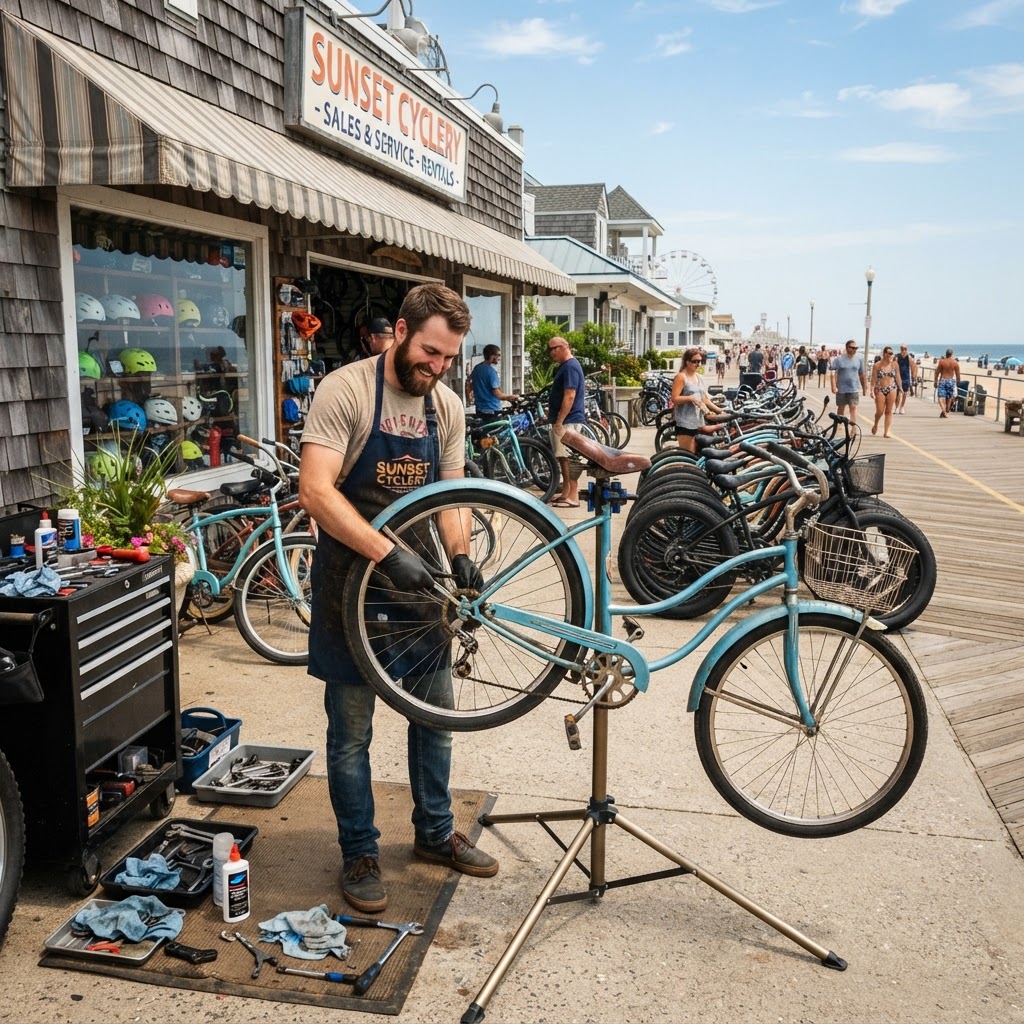
Keeping Your Bike in Shore Shape
Cycling on the Jersey Shore presents unique maintenance challenges. The salt air, sand, and humidity can accelerate wear and corrosion on your bike. But with the right maintenance routine, you can keep your bike running smoothly and extend its life significantly. Here's our guide to bike maintenance for coastal conditions.
The Salt Air Challenge
The biggest enemy of coastal cycling is salt. Salt air corrodes metal components, accelerates rust, and can cause chains, gears, and bearings to wear out faster than they would inland. Here's how to combat it:
- Rinse after rides: If you've been riding near the ocean, rinse your bike with fresh water after your ride. A quick spray with a hose removes salt residue before it can cause damage.
- Lube your chain regularly: Salt air dries out chains quickly. Use a wet lube (not dry lube) and apply it more frequently than you would inland — every 1-2 weeks for regular riders.
- Check for rust: Inspect your chain, bolts, and components regularly for signs of rust. Catching it early prevents bigger problems.
- Store indoors: Don't leave your bike outside in the salt air. Store it indoors or in a garage when not in use.
Sand and Debris
The boardwalk and coastal roads can have sand and debris that gets into your drivetrain and components:
- Clean your drivetrain: Wipe down your chain, cassette, and chainrings after rides to remove sand and grit. A clean drivetrain lasts longer and shifts better.
- Check your brakes: Sand can wear down brake pads quickly. Inspect your pads regularly and replace them when they get thin.
- Inspect tires: Sand and debris can cause cuts and punctures. Check your tires for embedded glass, sand, or debris before and after rides.
Humidity and Moisture
The coastal climate is humid, which can lead to condensation inside your frame and components:
- Grease your bearings: Have your hubs, bottom bracket, and headset serviced regularly to ensure they're properly greased against moisture.
- Check your cables: Humidity can cause cables to corrode inside the housing. If shifting or braking feels sluggish, it may be time for new cables.
- Use stainless steel: When replacing components, opt for stainless steel bolts and hardware where possible. They resist corrosion much better than standard steel.
Regular Maintenance Schedule
Every ride: Check tire pressure, quick releases, and brakes
Weekly: Clean and lube chain, wipe down frame
Monthly: Deep clean drivetrain, check brake pads, inspect tires
Seasonally: Full tune-up, bearing service, cable inspection
When to See a Pro
While basic maintenance can be done at home, some tasks are best left to professionals. If you're not comfortable with bearing service, cable replacement, or wheel truing, take your bike to a local shop. Check out our Atlantic City bike shop guide for shops that offer expert repair services.
Comments (0)
Log in to join the discussion
No comments yet. Be the first to share your thoughts!